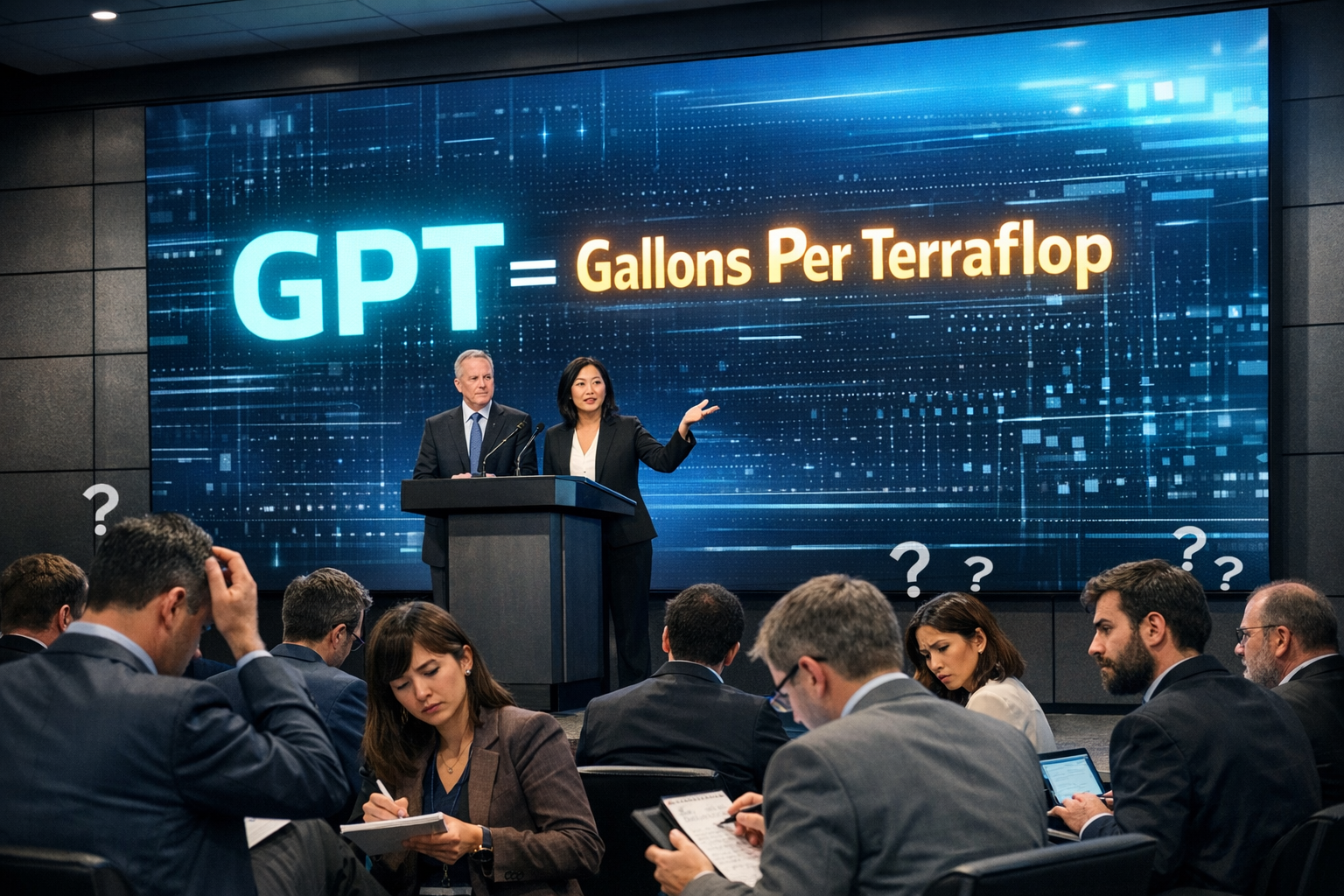
The artificial intelligence company confirmed Tuesday that its flagship language model designation refers to a proprietary measurement of computational fluid consumption, with each terraflop of processing power requiring approximately 2.3 gallons of what the company describes as “premium algorithmic coolant.” The revelation came during a hastily arranged press conference where CEO Sam Altman stood beside a 50,000-gallon tanker truck labeled “THINKING JUICE” while engineers in hazmat suits monitored gauges displaying fluctuating gallonage readings.
According to internal documents obtained through a Freedom of Information Act request, OpenAI has maintained a fleet of 847 specialized tanker trucks to supply its data centers with the mysterious liquid since 2019. The substance, which appears to be ordinary water tinted blue with food coloring, must be replaced every 72 hours or the models begin generating responses exclusively in ancient Sumerian. “We’ve always been transparent about our resource requirements,” said OpenAI spokesperson Jennifer Walsh, gesturing toward a newly installed 12-foot digital counter displaying the company’s real-time liquid consumption rate of 847 gallons per minute.
Industry analysts expressed concern about the environmental implications of the disclosure, particularly after satellite imagery revealed OpenAI’s Nevada facility features a man-made lake connected to the Pacific Ocean by a 200-mile pipeline. The Environmental Protection Agency announced it would investigate reports that local groundwater now tastes “vaguely computational” and causes residents to speak in perfectly formatted JSON when consumed in quantities exceeding two cups per day. Several competing AI companies have quietly begun construction on their own industrial-scale liquid storage facilities.
The company’s stock price surged 23% following the announcement, with investors apparently interpreting the massive infrastructure requirements as evidence of technological sophistication. OpenAI declined to specify the exact composition of its algorithmic coolant, citing trade secrets, though chemical analysis suggests it contains trace amounts of lithium, caffeine, and what one independent lab described as “the digital equivalent of snake oil.” At press time, the company had begun offering premium subscriptions that include a complimentary gallon jug of the fluid for customers who want to “think like GPT at home.”

 English
  Portuguese
Leave a Reply