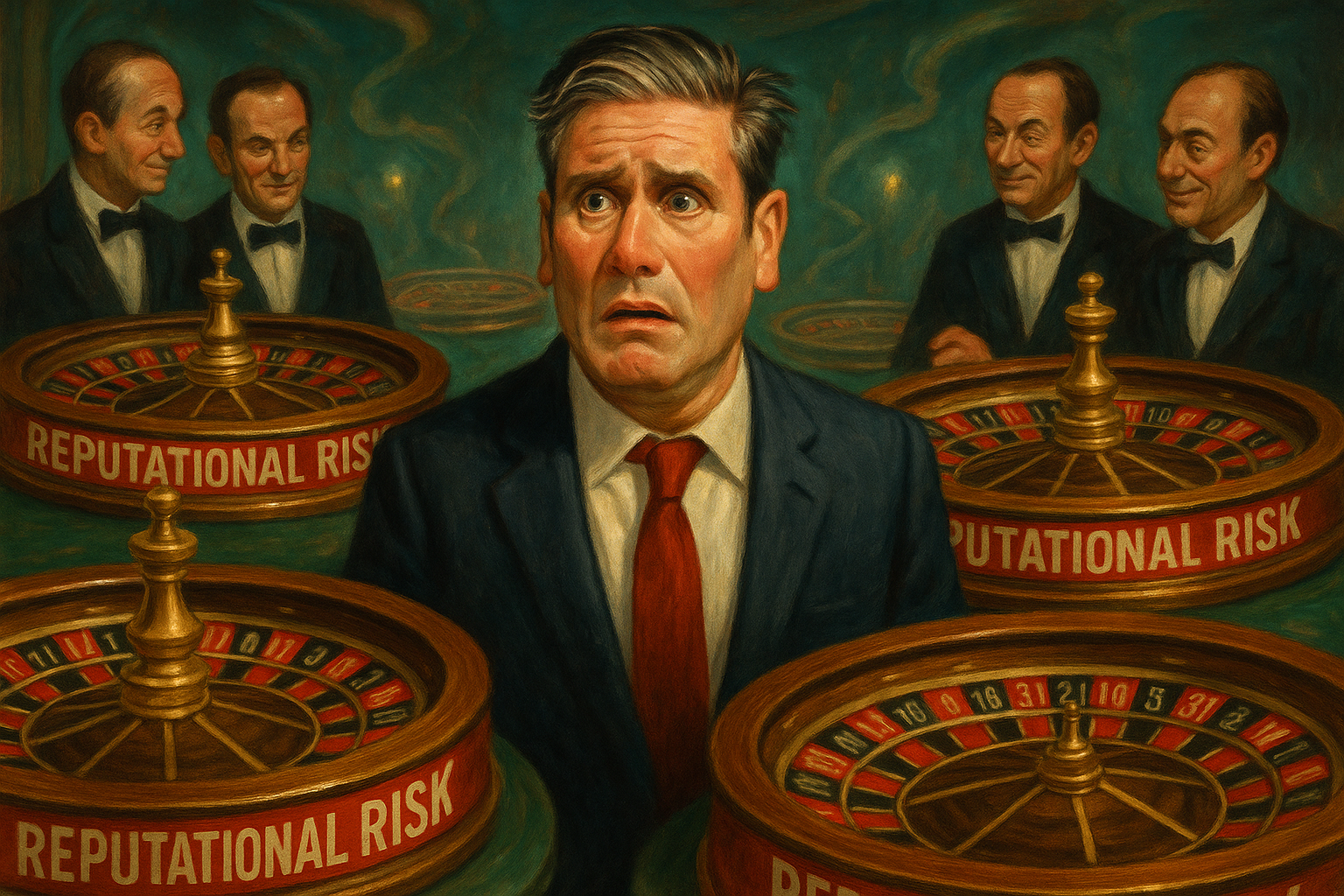
In a startling revelation, Labour leader Keir Starmer reportedly discovered that the term “reputational risk” does not refer to a strategic board game involving dice and colorful tokens. Sources within the Labour Party disclosed that Starmer had been under the impression that his position required him to manage a series of superficial reputation challenges akin to a casual game night, rather than navigating the complex web of political and ethical implications tied to Lord Mandelson’s connections with Jeffrey Epstein.
According to documents leaked from an internal Labour Party strategy meeting, Starmer had been repeatedly advised by party officials about the risks associated with Mandelson’s controversial associations. However, it was only after a detailed briefing by Sir Reginald Thornton, a renowned expert in political ethics and crisis management, that Starmer grasped the full gravity of the situation. Thornton reportedly explained, “Reputational risk isn’t just something you can roll your way out of. It requires careful management of public perception and accountability, not unlike the strategic depth of a particularly intense game of chess.”
The Labour Party has since initiated a comprehensive review of its internal communication strategies to prevent similar misunderstandings in the future. In the latest party memo, new guidelines emphasize the importance of distinguishing between metaphors and literal interpretations of political terminology. Despite this, there remains an underlying concern within the Labour ranks about the potential fallout from Mandelson’s past affiliations and whether the party’s leadership can pivot quickly enough to mitigate further reputational damage.
At press time, reports emerged that Starmer had convened a special task force to explore the potential of turning “reputational risk” into an actual board game, complete with a rulebook and customized playing pieces, as a fundraising initiative for the party’s upcoming conference.
 Portuguese
  English
Deixe um comentário